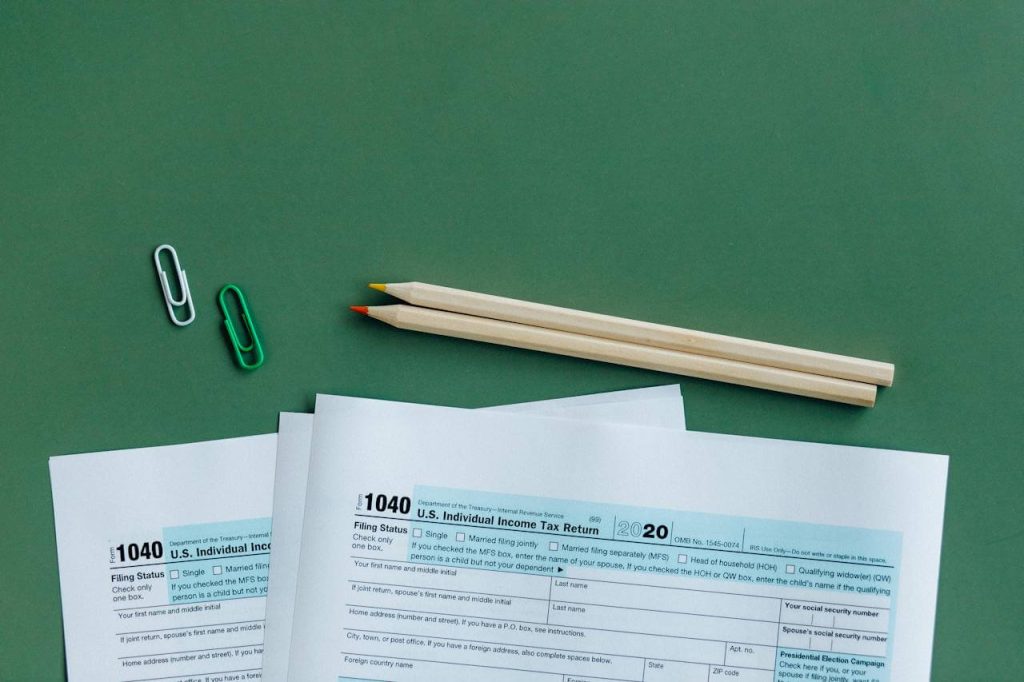

Although there is still a year to go before Verifactu becomes mandatory —with set dates in 2027 for companies and self-employed professionals— the reality is that it has already become a major topic in the business sector. The term appears in advisory forums, in conversations among entrepreneurs, in software updates, and, above all, on the agenda of the Spanish Tax Agency. Everyone talks about Verifactu, but not everyone fully understands what it entails, what changes it will bring, what problems it prevents, or whether it is truly worth starting to use it now.
This article aims to explain, in a simple and practical way without unnecessary technicalities, the questions everyone is asking. We will explain what Verifactu is, why it exists, what it is for, what will happen in 2027, whether you can step back if you have already activated it, and how you should prepare to reach that date smoothly.
What exactly is Verifactu?
Verifactu is the new system that will regulate how companies and self-employed professionals must issue and record invoices using software. It is not a Tax Agency application per se, nor a specific programme you must install. It is a mandatory system that all invoicing software must comply with to ensure that invoices are secure, traceable, and unalterable.
Until now, anyone could issue invoices using Excel, Word, or even apps that allowed invoices to be deleted and recreated without leaving a trace. This, besides being unprofessional, opened the door to errors, duplicates, accounting discrepancies, and, in some cases, potential fraud.
Verifactu aims to bring order to a field that has been far too flexible for decades. Under the new regulation, every generated invoice must be immediately registered with a unique code ensuring it has not been manipulated. It will also include a QR code that allows the Tax Agency and the recipient to verify its authenticity. Additionally, the Tax Agency will be able to receive information in real time or near-real time, depending on how each software operates.
In short, Verifactu is not a programme as such, but a method of invoicing, ensuring integrity, traceability, and transparency for the Tax Agency.
Why does Verifactu exist, and why will it be mandatory in 2027?
Verifactu reflects how business information should be managed in Spain and Europe. The digitalisation of processes, automated accounting, interoperability between companies, and tax control mean that invoices are much more than just a PDF file.
Verifactu has been designed to guarantee that what is invoiced actually reflects business activity. This includes preventing deletions, corrections without justification, unclear rectifications, or duplicate numbering. The system’s main objective is to reduce errors and limit cases of opaque or fraudulent invoicing.
The obligation will be introduced in two phases:
- 1 January 2027 for companies.
- 1 July 2027 for self-employed professionals.
From those dates onwards, any business using software to issue invoices must have a certified Verifactu-compatible programme. Only businesses issuing invoices completely manually will be exempt, which is becoming increasingly impractical.
What does Verifactu bring to a business?
Many business owners ask: “But how does this benefit me?”
Firstly, it provides a more professional and organised invoicing system. There will no longer be room for duplicates, lost invoices, poorly created series, or subsequent modifications that create chaos in accounting. Each document is registered, has a unique code, belongs to a specific series, and cannot be altered without issuing a rectifying invoice.
It also provides legal certainty, as a business that invoices with traceability can easily demonstrate that its documentation is correct. In audits or inspections, processes are faster and less stressful because everything is automated and verified from the start.
Finally, it professionalises relationships with clients. Receiving an invoice with a QR code and verification instils trust and transparency, representing a clear step forward in modernisation.
If I am already using Verifactu, can I stop using it?
This is one of the most common doubts today. Many businesses that update quickly are already issuing Verifactu-compliant invoices, even though it is not yet mandatory. The inevitable question then arises: “What if I want to step back now? Can I stop using it?”
Technically, yes, you could stop using it, but it makes little sense and can complicate matters more than you imagine.
There are several factors to consider. Firstly, even if you stop today, you will have to reactivate it in 2027. All the learning, tests, series reorganisation, and team adaptation will be paused, and you will have to start from scratch later.
Secondly, switching systems twice creates a documentary discontinuity. Part of your invoices will have been generated under an unalterable system and another part under a different system. This complicates life for your accountant, the Tax Agency, and yourself if you need to justify something in the future.
So yes, you could step back, but if you have already started, it is advisable to continue. Ideally, continue uninterrupted until 2027.
How should a business prepare for 2027?
Although there is still time, preparation for Verifactu should start well before it becomes mandatory. The most organised companies will begin in 2026, and some are already familiarising themselves with the tool.
The first step is to review your current invoicing process. If you use Excel, Word, downloaded templates, or software that allows invoice deletion, you will need to change. Verifactu requires reliable systems that register documents unalterably. Choosing compatible software is the most important step, and it is advisable to do this carefully, evaluating options, migrating data, and adapting processes.
Secondly, reviewing the invoice series structure is key. Many businesses work with mixed series, duplicate numbering, or inconsistent systems. With Verifactu, this will no longer be possible. There should be a clear main series, separate series for rectifying invoices, and a strictly sequential numbering system.
Thirdly, it is essential to prepare the team. Administrative staff must understand when a rectifying invoice is issued, how to report incidents, avoid duplicates, and follow processes to guarantee traceability.
Finally, it is very useful to run tests in 2026. Start issuing some invoices with Verifactu, see how they are stored, how they are sent to clients, and how they integrate into accounting. This will allow you to adjust operations before the system becomes mandatory.
If you have already started using it, you are a step ahead. If not, there is still time to prepare without rushing.